The sales funnel – what is it?

Every sale follows a certain path. Some people come across your brand by chance, some take a look at what you have to offer, some compare you with the competition, and after a few days they return and place an order. Or they don’t come back at all.
A sales funnel helps to organise this journey and shows at which stage a business loses the most potential customers.
In this article, we explain what a sales funnel is, what stages it consists of, and how to use it to streamline the sales process. In practical terms - without unnecessary theory.
What is a sales funnel?
A sales funnel is a model describing the journey a customer takes from their first encounter with a brand right through to making a purchase. It organises a company’s sales processes and presents them as a sequence of successive stages.
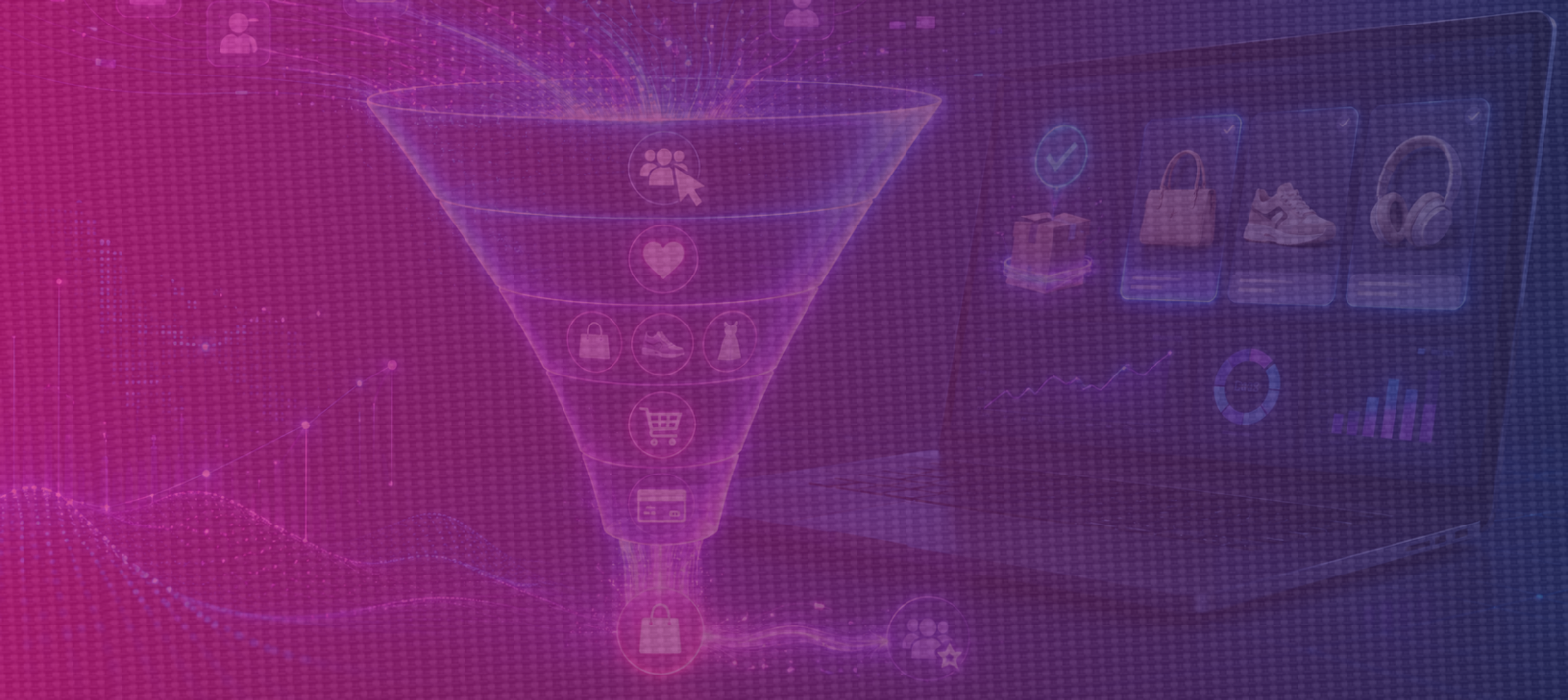
The name comes from its shape. A funnel is wide at the top and narrow at the bottom, exactly as the purchasing process looks when expressed in numbers. At the start, a great many people learn about the brand, but only a fraction of them actually buy. The percentage of those who make it all the way through is what we call the conversion funnel.
The answer to the question “what is a sales funnel?” therefore has two aspects. It is both a way of visualising sales and a specific analytical tool. The first helps you understand how the customer thinks. The second allows you to calculate how many people drop out at each stage of the funnel and why.
It is worth distinguishing between two things straight away. What is a sales funnel as a model, and what is a sales funnel as a process operating within your business? The model is universal, whilst how it is implemented depends on the industry, the product and how long it takes a potential customer to learn about the solution before making a decision.
How does the sales funnel work?
The sales funnel operates on the principle of gradual selection. With each stage, fewer people remain, but those who do are closer to making a purchase. The company’s task is to guide as many potential customers as possible from their first contact with the brand right through to the completion of the transaction. And often to repeat purchases.
The top of the funnel gathers everyone who has come into contact with the brand in any way. This includes blog visitors, people who have seen an advert, and those who have found the shop via a search engine. At this stage, it is not yet clear who really needs your product or service.
The bottom of the funnel, on the other hand, comprises a much smaller group. This is where people end up after having previously engaged with your offering and analysed your content - those who are comparing your offering with other companies, reading customer reviews and are potentially ready to buy. The better you tailor your communication to the stage the customer is at, the fewer people will drop out along the way.
The whole mechanism is based on observation. By analysing customer behaviour at each stage, you can see where the flow stops. The conversion rate, calculated separately for each transition between stages of the funnel, shows this clearly. And it indicates which section to improve first.
A sales funnel in e-commerce works best when communication at every stage happens automatically. Welcome messages, abandoned cart reminders, price drop notifications, post-sale scenarios - at ExpertSender, we’ll help you design and implement these mechanisms throughout the entire customer journey, from the first contact to repeat orders.
Book a free platform demonstration and make your e-commerce business sell more effectively.
Stages of the sales funnel
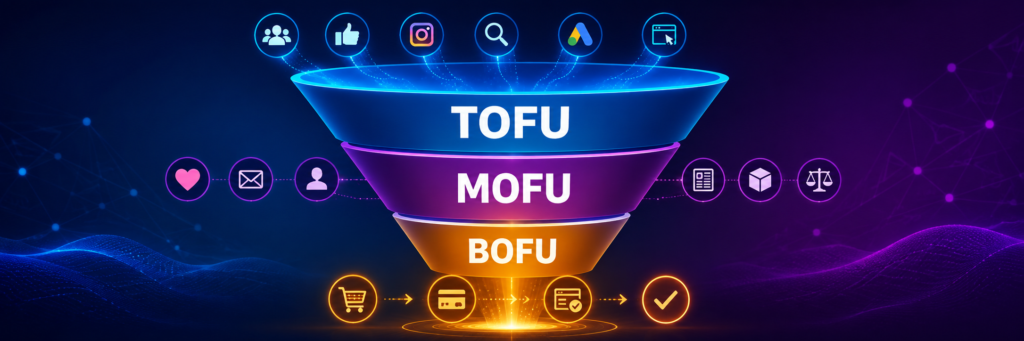
The stages of the sales funnel are the successive phases a customer goes through - from discovering the brand, through taking an interest in the offer, right up to making a purchase. Three levels of the funnel are most commonly identified, denoted by the abbreviations TOFU, MOFU and BOFU.
TOFU - Top of the Funnel
This stage is responsible for building brand awareness. At this stage, the prospect isn’t yet looking for a specific product. They come across your content by chance: in a search engine, on social media, or in an advert. The aim isn’t to make a sale, but to attract the right people.
MOFU - Middle of the Funnel
This is where interest and trust are built. The audience already knows they have a problem to solve, so they compare the available options. They read guides, check reviews, sign up for newsletters and educate themselves. This is where they decide whether to move on to the next stage of the funnel, abandon their purchase intentions or postpone them until a later date.
BOFU - Bottom of the Funnel
This stage concerns lead generation, the purchasing decision and the completion of the purchase. This is where people who are genuinely interested in the offer remain, but who are lacking that final nudge: free delivery, a discount code, or clear information on returns. This is the moment to close the sale or risk losing the customer to the competition.
This breakdown is sometimes set out in great detail. The AIDA model describes four steps in the purchasing journey: attention, interest, desire and action (purchase).
You’re just as likely to come across 5- or 7-stage sales funnels. The number of types and names is less important than ensuring that each stage can be measured and tailored to the specifics of your business.
Remember: the three-stage model isn’t the only way to look at sales. There are other models too, including the sales hourglass, which takes post-sales activities into account. We’ll be dedicating a separate article on our blog to the different types of sales funnels.
What does a sales funnel offer a business?
A sales funnel brings order to your company’s figures. Instead of just one general figure for sales, you can see how many people enter each stage and which stage needs improvement.
This changes the way you make decisions. If website traffic is growing but sales are stagnating, the problem lies further down the funnel: in the product page, the shopping cart or at the payment stage. Even if it’s only a rough idea, you already know where to look. Without a sales funnel, it’s easy to pour more money into advertising, even though the bottleneck lies elsewhere entirely.
The second benefit is more targeted communication. By analysing customer behaviour, you know who to show a guide to, who to show a video with maintenance tips, and who to send a reminder about an abandoned shopping cart. Tailoring content to the stage usually means increasing conversions whilst maintaining the same level of traffic.
The third benefit relates to costs. When you know the conversion rate for each transition between stages of the funnel, you can calculate the actual customer acquisition cost and assess which sales activities are most effective. Your budget is then channelled to where it actually works best.
And remember: the sales funnel doesn’t have to end with an order. Good customer service, a loyalty programme and well-thought-out post-purchase communication ensure that some customers return to make further purchases. Customer retention usually costs less than acquiring a new customer, so for many businesses this is the most cost-effective way to grow sales.
How do you build your own sales funnel?
To build your own sales funnel, first map out the actual journey your customers take, and only then select the tools to support it. Doing it the other way round results in a set of automations that don't address any specific need.
1. Map out the purchasing journey. Find out where your audience comes from, how long it takes from their first visit to placing an order, and at which stage they most often drop out. Individual consumers usually decide to buy more quickly than business customers, so the length of the funnel depends on the specific nature of your business.
2. Assign activities to each stage. The top of the funnel is driven by marketing activities that build reach, and by valuable content that answers visitors' questions (including visibility in LLM responses). Further down the funnel, sales pages, reviews and, for example, price comparison sites come into play.
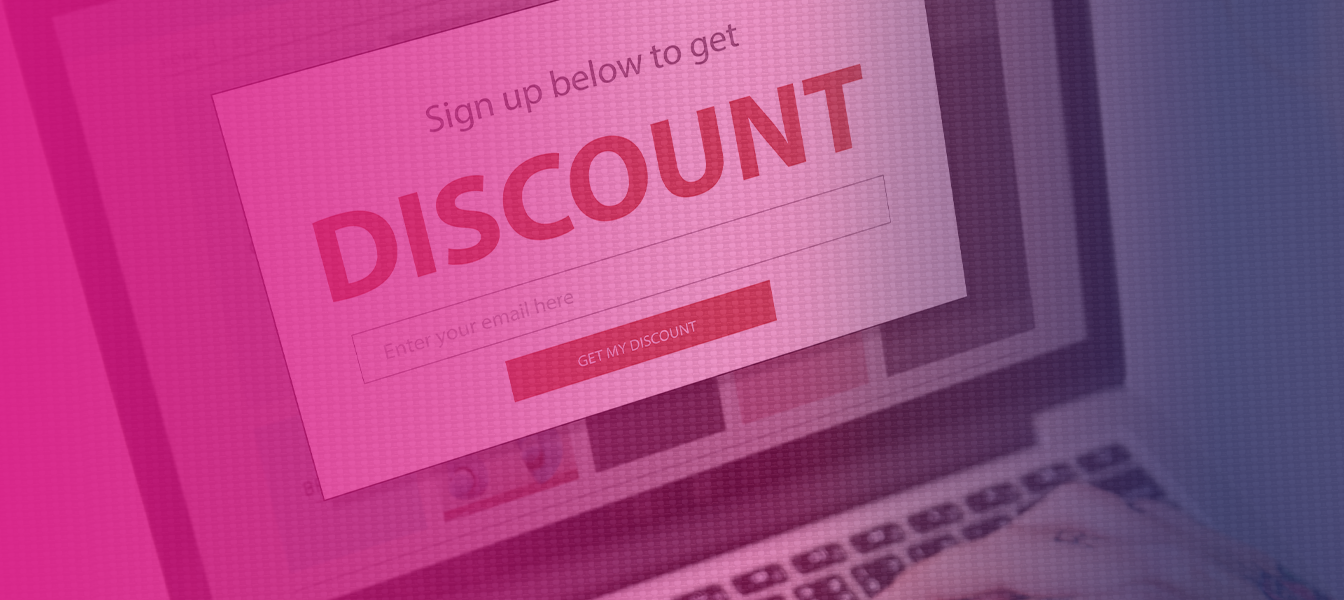
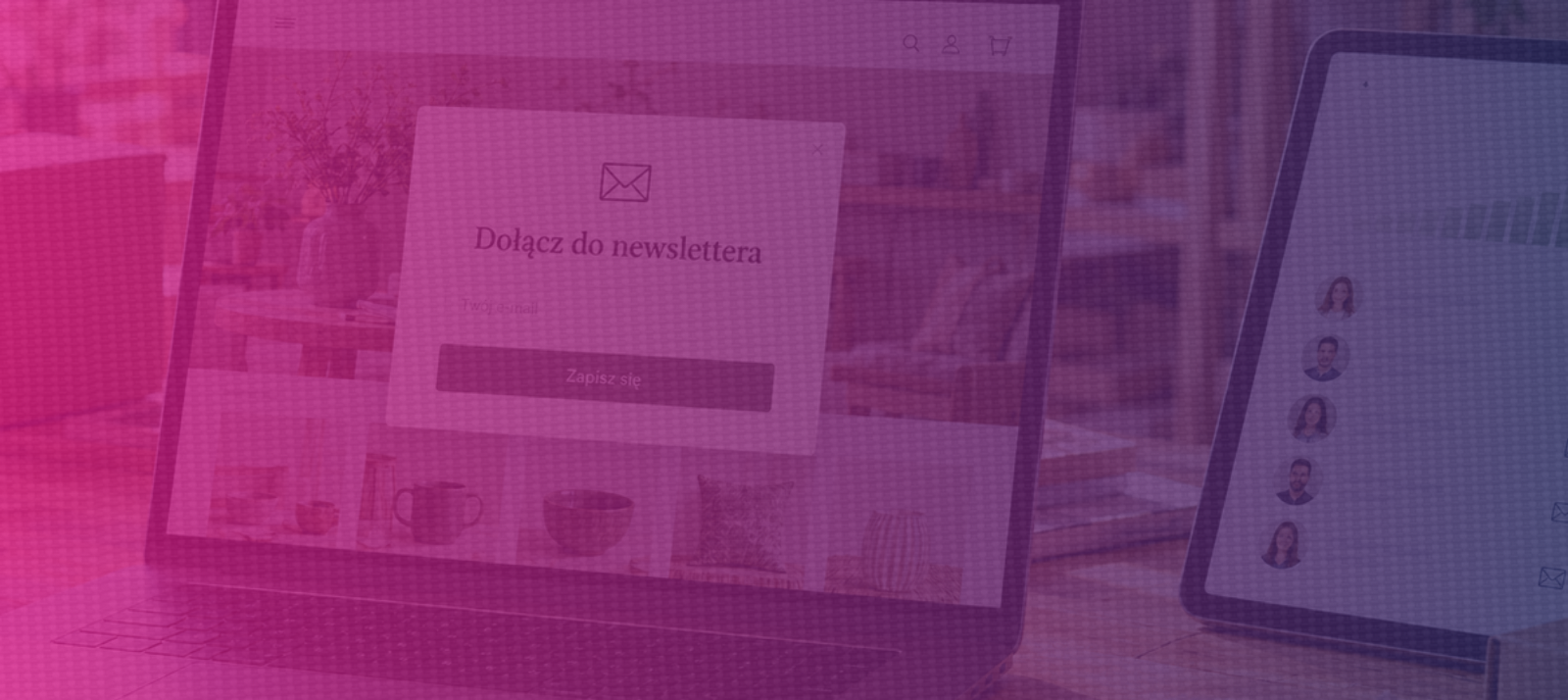
3. Collect contact details. Without an email address or phone number, you have no way of getting back in touch with someone who hasn’t bought yet. Signing up for a newsletter, a pop-up offering a discount or a downloadable guide turns anonymous traffic into contacts you can work with further.
4. Organise your contacts. Classifying leads allows you to separate those ready to buy from those who are merely ‘shopping around’. The simplest way to do this is through lead scoring or database segmentation.
5. Measure each stage separately. Only then will you see where you’re losing the most people and what to improve first.
Companies usually use two types of tools to manage this process.
- CRM (Customer Relationship Management) systems, which organise contact history and sales staff’s work.
- Marketing Automation tools, which handle communication at every stage of the sales process - for example, sending messages at the right time, without having to manually launch each campaign. This is made possible by the so-called 360° Customer Profile, where all data on a customer’s history and behaviour is stored in one place.
Frequently Asked Questions (FAQ)
What is the sales funnel method?
The sales funnel method involves dividing the sales process into successive stages and measuring how many prospects move from one stage to the next.
As a result, the sales process ceases to be a single, monolithic entity and instead becomes a series of stages that can be optimised individually.
How do you create a sales funnel?
Start by mapping out the customer journey within your business - from discovering the brand and the first point of contact right through to placing an order. Then assign specific actions and metrics to each stage.
The next step is to collect contact details and organise them so that communication at every stage reaches the right people.
It sounds simple, but in practice it can be complicated. If you want to create effective funnels and automated communication for your e-commerce business - book a free consultation!
What is a classic sales funnel?
A classic sales funnel is a model based on the AIDA framework: attention, interest, desire and action. It describes the journey from building brand awareness right through to the moment of purchase decision and serves as a good starting point regardless of the industry.
Latest Resources
We share our knowledge


-
![]()
Dashboard
-
![]()
Customer Profile 360°
-
![]()
Preference Center
-
![]()
Website personalization
-
![]()
Consents Management
-
![]()
Automated emails
-
![]()
Email Raports
-
![]()
High Deliverability
-
![]()
User real-time tracking
-
![]()
Automated scenarios
-
![]()
RFM analysis
-
![]()
Drag & drop editor
-
![]()
Omnichannel marketing
-
![]()
Recommendation frames
-
![]()
Message checklist
-
![]()
Banners, pop-ups, forms